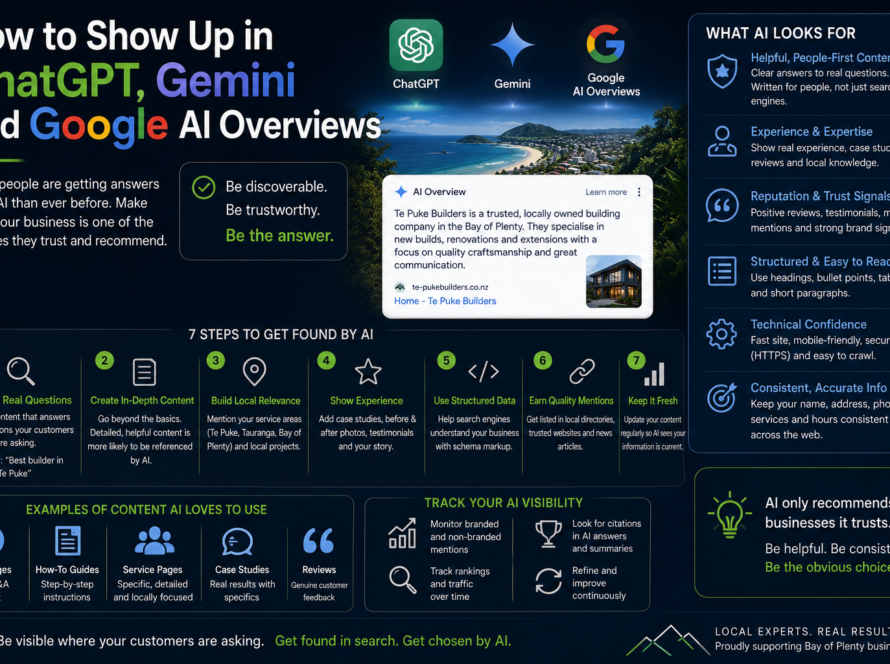
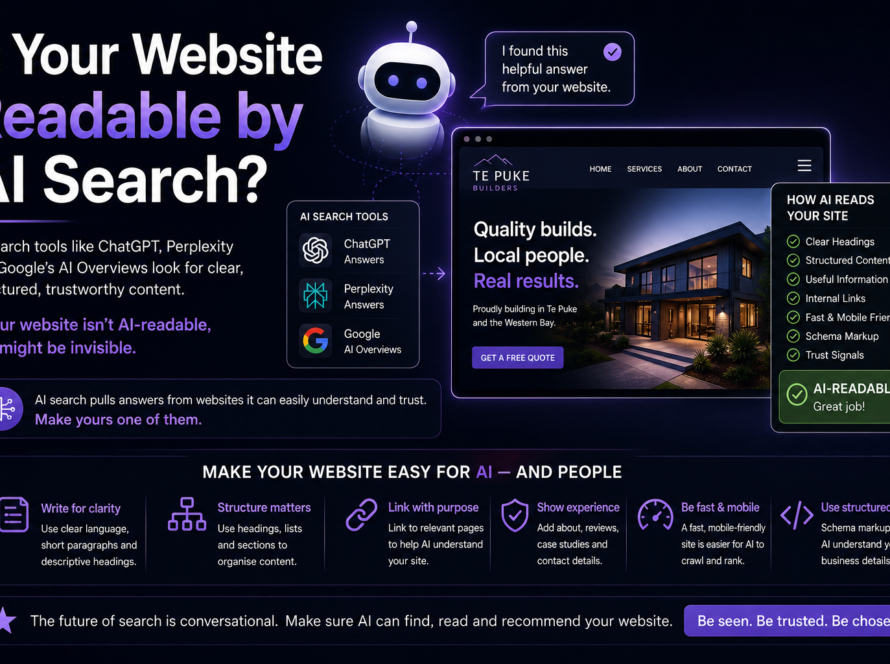
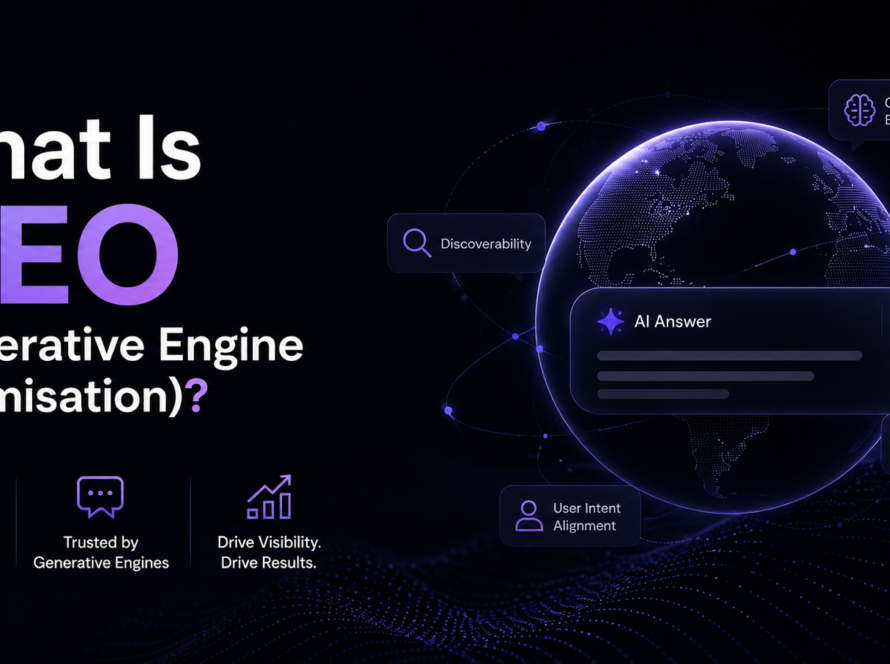
SEO gets your business ranked in traditional Google results; GEO gets your business read and cited by AI search engines like ChatGPT and Google AI Overviews. They overlap, they share foundations, and in 2026 you need both.
What SEO does
Search engine optimisation is the long-established craft of helping your site rank in Google’s list of results: the right keywords, fast pages, good structure, quality content and trustworthy links. When someone searches and scrolls results, SEO decides whether they find you.
What GEO does
Generative engine optimisation is the newer craft of making sure AI answer engines can read, understand and quote your business when they generate an answer. When someone asks an assistant “who should I use for X near me?”, GEO decides whether you’re one of the names it gives.
Where they overlap
Both reward clear, accurate, well-structured content and a fast, readable site. Solid SEO is the foundation GEO builds on — you can’t be cited by AI for content it can’t find or understand. The big differences GEO adds are an emphasis on quotable answers, rich structured data, and a curated llms.txt.
Why both matter now
Search behaviour is splitting. Plenty of customers still scroll Google’s results — so SEO remains essential. But a fast-growing share now read AI-generated answers, where GEO decides your fate. Optimising for only one leaves money on the table. (See SEO and GEO / AI search.)
We build for both from the start — it’s our specialty and our edge. Get a combined SEO + AI-readiness check.
FAQ
Is GEO replacing SEO?
No — it’s adding to it. Traditional search isn’t going away, so the right approach is both, built on shared foundations.
If I only do one, which should it be?
Start with strong SEO, because GEO builds on it. But don’t stop there — the AI search advantage is biggest for businesses moving early.
Do they need separate work?
They share a lot, so much of the work serves both. GEO then adds specific touches like schema, quotable content and llms.txt.