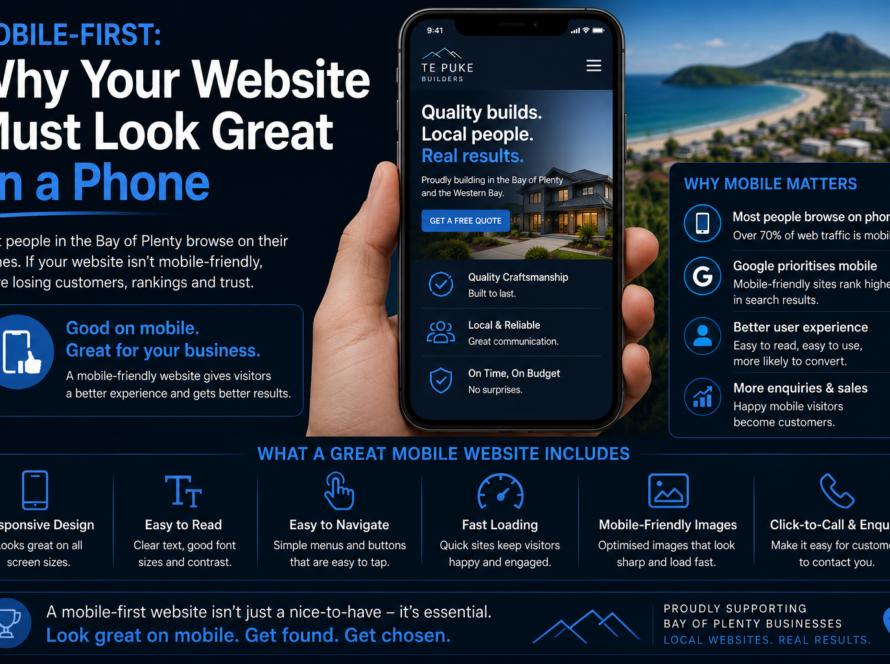
A good small-business website is fast, clear, easy to use on a phone, and built so customers — and search engines — instantly understand what you do and how to act. It doesn’t need to be flashy. It needs to do its job.
The non-negotiables
- Fast loading. A slow site loses visitors before they ever see it. Speed also helps your Google rankings.
- Mobile-first. Most local visitors are on a phone. If it’s awkward to read or tap, they leave.
- Clear messaging. Within seconds a visitor should know what you offer, where, and what to do next.
- Easy contact. Phone, email and a simple form — visible, not buried.
- Trust signals. Real photos, reviews, and a genuine about section.
The things that quietly matter
Behind the scenes, a good site has a sensible structure (one clear page per main service), proper headings, descriptive image text, and structured data so Google and AI search understand it. These are invisible to visitors but decisive for being found. (That’s the heart of SEO and GEO.)
What to avoid
Overloaded page builders that bloat the code, walls of stock photos, vague slogans that say nothing, and “coming soon” pages that never finish. Clarity beats clever every time.
If you’re planning a new site or fixing an old one, this checklist is a good yardstick. Want us to apply it to yours? See our web design service or get in touch.
FAQ
How many pages should a small-business website have?
Start with the essentials — home, services, about, contact — and add more only where they earn their place. A focused site usually out-performs a sprawling one.
Do I need a blog?
Not always, but a regularly updated blog helps with SEO and gives AI search fresh, quotable content. It’s a strong long-term asset if you’ll keep it up.
How do I know if my current site is good enough?
Check it on your phone, time how long it takes to load, and ask whether a stranger would understand what you do in five seconds. A website audit answers it properly.