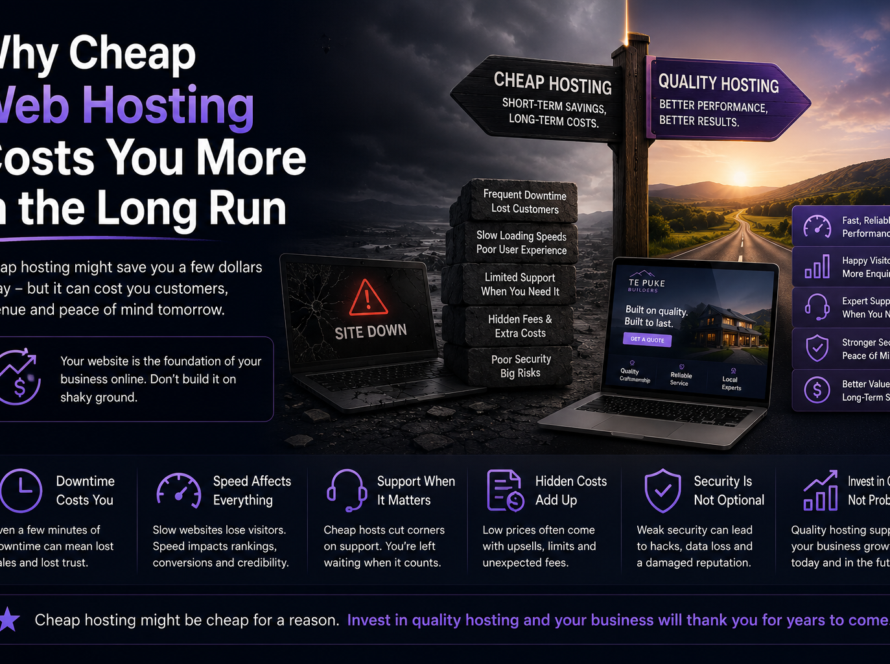
When your website goes down, you don’t just lose a page for a while — you lose enquiries you’ll never know about, a slice of customer trust, and potentially some search visibility. The good news is that most downtime is preventable with the right setup.
What actually happens
- Lost enquiries. Anyone who visits during the outage hits a dead page and goes to a competitor. You rarely find out it happened.
- Damaged trust. A customer who’s just heard about you and finds your site down quietly assumes the worst.
- SEO impact. Brief outages are usually fine, but repeated or lengthy downtime can affect how search engines treat your site.
- Knock-on effects. If your email runs on the same domain and setup, it can go down too.
Why sites go down
Common causes: cheap, overloaded hosting; a botched update; a hack; an expired domain or certificate; or a traffic spike the server can’t handle. Notice how many of these come back to hosting and maintenance.
How to prevent most of it
- Solid managed hosting tuned to handle load and stay online.
- Uptime monitoring so problems are caught and fixed fast — ideally before you’d even notice.
- Tested updates rather than blind ones that can break the site.
- Security and backups so a hack or error is a quick rollback, not a long outage.
- Domain and certificate renewals tracked so they never lapse.
We build all of this into Red5 Host hosting and our care plans — monitored, maintained and backed up, so downtime is rare and short. Ask about keeping your site online.
FAQ
How do I know if my site has gone down?
Without monitoring, you usually find out from a customer — too late. Uptime monitoring alerts you (or your provider) immediately.
Is some downtime unavoidable?
Brief maintenance windows happen, but frequent or long outages aren’t normal and usually point to poor hosting or neglect.
Can downtime hurt my Google rankings?
Occasional short outages are generally fine. Repeated or prolonged downtime can erode trust and visibility over time.